Now Accepting New Patients
Existing Patients
(559) 784-6523
New Patients
(559) 750-0130

Dental anxiety affects a large number of adults and children — it’s one of the most common reasons people delay or avoid care. If nervousness keeps you from regular checkups or prevents important treatment, sedation dentistry can change that. At Richard Hardt's Live Oak Dental, our goal is to make visits calm, predictable, and respectful of each patient’s comfort and dignity.
Sedation dentistry is not about putting people to sleep; it’s about removing the barrier that fear and stress create. With carefully selected, monitored techniques, we help patients relax, tolerate longer appointments, and get the treatment they need without the emotional and physical strain that often accompanies dental visits.
Below are clear, patient-focused explanations of how sedation works, who tends to benefit, and what to expect from common options. The intent is to give practical, trustworthy information so you can feel confident discussing sedation with our team.
Sedation creates a calmer mental state so a dental visit feels less threatening. For many patients, the presence of sedation reduces the body’s fight-or-flight reactions — a racing heart, tight muscles, or an overwhelming need to leave the chair — and replaces those sensations with a steady sense of ease. This helps both the patient and the clinical team work more effectively.
Levels of sedation range from very light — where you remain fully aware — to deeper conscious states that make memories of the procedure fuzzy or nonexistent. Regardless of level, sedation used in the office is chosen to preserve patient safety and responsiveness while minimizing discomfort and anxiety.
We always pair sedation with local anesthesia so you won’t feel pain at the treatment site. The sedative smooths the emotional experience; the anesthetic blocks physical sensations. Together they allow complicated or lengthy procedures to be completed more comfortably and in fewer visits when appropriate.
Before any sedative is recommended, we review medical history, current medications, and any previous experiences with sedation or anesthesia. That pre-appointment conversation determines which method will be safest and most effective for you. Clear instructions — such as fasting or arranging a ride home if needed — are provided in advance so the day of treatment goes smoothly.
During the appointment, our team continuously monitors breathing, heart rate, and oxygen levels and is trained to respond quickly to changing needs. If you receive conscious sedation, you will typically be able to follow verbal cues and respond when prompted, even while feeling deeply relaxed. For deeper forms of sedation, an escort to and from the office is required because reaction times and coordination can be temporarily slowed.
Aftercare varies with the type and depth of sedation used. Recovery for mild inhalation sedation is rapid, often allowing patients to drive themselves home. Oral and IV sedation require additional observation and a responsible adult to accompany you. We’ll explain recovery expectations and any special instructions before you leave so you know how to rest safely at home.

For some patients, fear of the dentist is a mild unease; for others it is a severe phobia that prevents care entirely. Sedation is a practical tool for anyone whose anxiety is strong enough to interfere with routine or necessary treatment. It allows patients to pursue timely care rather than waiting until a problem becomes urgent.
Sedation is also helpful for lengthy or complex procedures that require a patient to remain still with an open mouth for extended periods. By reducing awareness of time and discomfort, sedation improves tolerance for restorative work, implant procedures, and oral surgery, making it possible to complete more in a single visit when clinically appropriate.
Other reasons to consider sedation include a hypersensitive gag reflex, pronounced sensitivity to touch or temperature in the mouth, and conditions that make sitting for treatment difficult — such as certain disabilities, cognitive challenges, or acute physical pain. In each case, sedation supports a safer, more manageable visit for the patient and a more predictable workflow for the clinician.

Several proven sedation methods are available in dental offices, and the right choice depends on the patient’s medical background, anxiety level, and the nature of the procedure. Each method is administered by trained professionals and selected with safety as the primary concern. Below are summaries of the approaches most frequently used in outpatient dental care.
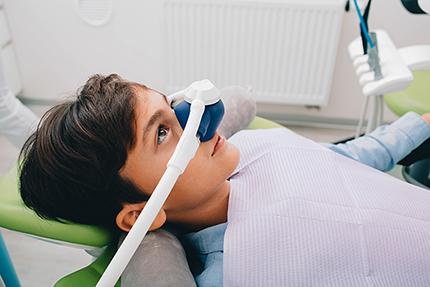
Nitrous oxide, often called “laughing gas,” is a mild inhalation sedative delivered through a small nasal mask. It reduces anxiety quickly and wears off just as fast when the gas is discontinued, which makes it a convenient option for shorter appointments or for patients who need a light calming effect without extended recovery.
Oral sedatives are prescribed to be taken before the appointment. They produce a deeper state of relaxation and can cause drowsiness; patients usually remain responsive but may have limited memory of the procedure. Because of lingering effects, someone must accompany the patient to the office and drive them home afterward.
Sedation exists on a spectrum from minimal to deep. Conscious sedation allows patients to breathe independently and remain responsive to commands while feeling relaxed. When deeper sedation or general anesthesia is necessary, the patient may be unresponsive and require more advanced monitoring and support. General anesthesia is typically reserved for hospital settings or cases where other forms of sedation are inadequate.
Conscious sedation is commonly used in dental practices because it balances safety with comfort: patients are relaxed but maintain protective reflexes and can follow simple instructions. Deep sedation or general anesthesia removes awareness entirely and carries greater physiological risk, so it is reserved for specific medical or behavioral indications and is administered in environments equipped for advanced airway and life-support management.
Our team evaluates each patient to determine the lowest effective level of sedation that will allow safe, comfortable treatment. That evaluation includes reviewing medical history, any sleep or breathing concerns, current medications, and other health factors that influence sedation choices.
Inhalation sedation (nitrous oxide) is fast-acting and easily reversed, making it suitable for children and adults with mild to moderate anxiety. It can also reduce gagging and help with brief procedures where extended recovery is undesirable. Because its effects dissipate quickly, patients often resume normal activities shortly after their appointment.
IV sedation provides a deeper, more controllable level of sedation and is useful when a stronger calming effect is needed or when time in the chair will be long. It takes effect quickly and can be adjusted in real time. Patients are required to fast beforehand and must have a companion to drive them home after the visit.
Each method has its place. Our priority is to match the technique to the individual — selecting the option that provides the needed level of relaxation while keeping safety, monitoring, and recovery needs in clear view.
Choosing sedation is a collaborative decision between you and your dental team. If dental anxiety or physical challenges have prevented you from getting care, sedation offers a respectful, medically sound way to move forward. Contact us to discuss whether sedation dentistry is appropriate for your needs and to learn what to expect at your first appointment.
Sedation dentistry uses medication to reduce anxiety and increase comfort during dental care. It ranges from minimal relaxation with nitrous oxide to deeper conscious sedation that lessens awareness of the procedure. Sedation is always combined with local anesthesia so patients do not experience pain at the treatment site.
By reducing stress responses such as a racing heart or a strong gag reflex, sedation helps patients tolerate longer or more complex visits. It can make it possible to complete restorative work, extractions, or implant procedures in fewer appointments when clinically appropriate. The approach is intended to preserve dignity and make dental care accessible to patients who otherwise avoid treatment.
Candidates include patients with significant dental anxiety or phobia that prevents routine care, people who have a pronounced gag reflex, and those who need lengthy or complex procedures. Sedation is also commonly recommended for patients with certain physical or cognitive conditions that make remaining still difficult. Age, medical history, and current medications are considered when evaluating candidacy.
A careful preoperative evaluation helps determine whether in-office sedation is appropriate and which method offers the safest option. Some medical conditions or medication interactions may rule out certain sedatives, so full disclosure of health history is essential. The dental team will discuss alternatives and select the lowest effective level of sedation to achieve comfort and safety.
Common options include inhalation sedation with nitrous oxide, oral sedatives taken before the appointment, and intravenous (IV) sedation administered in the office. Nitrous oxide produces mild, rapidly reversible relaxation and is useful for short visits or for children and adults with moderate anxiety. Oral sedatives create deeper relaxation and potential drowsiness, while IV sedation provides a more controllable and often deeper level of sedation.
Each method has distinct monitoring and recovery requirements, so the choice depends on the patient’s medical profile, anxiety level, and the length or complexity of the procedure. The team selects and adjusts medication with safety and predictability in mind. Whenever deeper sedation is used, a responsible adult must accompany the patient to and from the appointment.
The selection begins with a thorough review of the patient’s medical history, current medications, previous experiences with sedation or anesthesia, and any breathing or sleep-disordered breathing concerns. The dentist assesses the planned procedure’s length and invasiveness and considers physical and emotional factors that influence tolerance. Together these factors guide the choice of the lowest effective level of sedation.
Standard protocols include checking for drug interactions, screening for conditions that increase risk, and discussing expected recovery and monitoring needs with the patient. The team documents the plan and obtains informed consent before proceeding. If a case requires deeper anesthesia than can be safely managed in the office, the dentist will recommend an appropriate referral or setting.
Your dental team will give specific pre-appointment instructions based on the type of sedation planned, but common directions include fasting for a set period before IV or oral sedation and avoiding alcohol or certain medications. Bring a complete list of prescriptions, over-the-counter medications, and supplements so the provider can check for interactions. Wear comfortable clothing and arrange for a responsible adult to drive you home if required.
Communicate any recent illnesses, changes in health, or questions about pregnancy, sleep apnea, or breathing problems before the day of treatment. Follow instructions about taking routine medications on the day of the appointment unless directed otherwise. Clear preparation helps the visit proceed safely and reduces the chance of postponement for medical reasons.
Before treatment begins, the team confirms the sedation plan, reviews vital signs, and places appropriate monitoring equipment to track breathing, heart rate, and oxygen levels throughout the procedure. Local anesthesia is administered at the treatment site so you will not feel pain even while sedated. If conscious sedation is used, you will usually remain able to respond to verbal cues while feeling relaxed; deeper sedation may mean limited awareness and slower responses.
The clinician and trained staff continuously observe the patient and adjust medication levels as needed to maintain the targeted level of sedation. Emergency protocols and resuscitation equipment are available and staff members are trained in airway management and advanced life support. After the procedure, patients move to a recovery area where monitoring continues until they meet discharge criteria.
Recovery time varies with the sedation method: nitrous oxide typically wears off within minutes, while oral and IV sedatives may cause drowsiness for several hours. You should expect temporary impairment in coordination, judgment, and reaction time after deeper sedation, so driving or operating machinery is not safe until fully recovered. The team will provide written aftercare instructions and tell you when normal activities may resume.
Common mild side effects include grogginess, dry mouth, nausea, or lightheadedness, and these usually resolve within a few hours. If you experience persistent or concerning symptoms such as difficulty breathing, severe vomiting, or prolonged disorientation, contact the practice or seek emergency care. Follow any medication instructions and eat lightly as tolerated unless otherwise directed.
When administered and monitored by trained professionals, in-office sedation is generally safe and effective for reducing anxiety and facilitating care. Risks depend on the medication and level of sedation and can include respiratory depression, allergic reactions, nausea, or temporary cognitive effects. Thorough preoperative screening and continuous monitoring are used to minimize these risks and to respond quickly if problems arise.
Certain health conditions, drug interactions, or uncontrolled medical issues increase the potential for complications, which is why honest disclosure of medical history is essential. The dental team will explain specific risks related to the chosen technique, discuss alternatives, and obtain informed consent before proceeding. If a patient’s risk profile warrants additional support, the dentist will recommend care in a setting equipped for advanced anesthesia.
Yes, children can receive sedation when clinically indicated, but the approach is tailored to age, weight, developmental level, and the nature of the procedure. Nitrous oxide is commonly used for younger children because it is safe, fast-acting, and easily reversible, while oral or deeper sedation may be reserved for older children or specific situations. Pediatric dosing, behavior management techniques, and parental consent are important parts of the planning process.
The dental team will review parental instructions for preparation and recovery and will require a responsible adult to accompany the child to and from the appointment. Safety standards for monitoring and emergency readiness are the same as for adult patients. If a child’s needs exceed what can be safely managed in the office, the dentist may refer to a pediatric dental specialist or an ambulatory surgery center.
Start by describing the nature and severity of your anxiety, previous experiences with dental care or sedation, and any reactions to medications or anesthesia. Share a complete medical history, including prescriptions, over-the-counter drugs, supplements, and any history of sleep apnea, respiratory issues, heart conditions, or pregnancy. Clear communication allows the team to tailor a safe sedation plan and to recommend appropriate alternatives when needed.
If you prefer, request a preoperative consultation to review the sedation options, monitoring procedures, and recovery expectations in detail; this conversation can help you make an informed decision. The office of Richard Hardt's Live Oak Dental follows careful evaluation and monitoring protocols and will explain what to expect at every step so you can proceed with confidence. Bring a list of questions and any supporting medical records to ensure a thorough discussion.