Now Accepting New Patients
Existing Patients
(559) 784-6523
New Patients
(559) 750-0130

If your dentist recommends a root canal, there’s no reason for undue worry. Modern root canal treatment is a precise, routine procedure designed to relieve deep tooth pain, remove infection, and preserve the natural tooth when possible. Many patients tell us that the discomfort they feared is far less than the pain the treatment resolves.
Our team uses contemporary techniques and equipment to provide careful, comfortable care. At the office of Richard Hardt's Live Oak Dental we prioritize clear explanations and patient comfort so you can make informed choices about preserving your smile.
Saving a natural tooth is usually preferable to extraction when the root structure and surrounding bone remain viable. A treated tooth retains chewing efficiency, helps maintain proper bite alignment, and supports the jawbone — all of which protect neighboring teeth and long-term oral function. Root canal therapy removes the diseased tissue inside a tooth while leaving the outer structure intact.
Advances in instrumentation and materials have improved the predictability and longevity of root canal treatment. When performed carefully and followed by an appropriate restoration, treated teeth often function for many years — frequently for the lifetime of the patient. This makes root canal therapy a conservative, tooth-preserving choice compared with extraction and replacement.
Choosing to preserve a tooth through endodontic therapy also reduces the need for broader dental work later on. Maintaining your own tooth whenever feasible simplifies daily care and often delivers a more natural feel and appearance than prosthetic replacements.

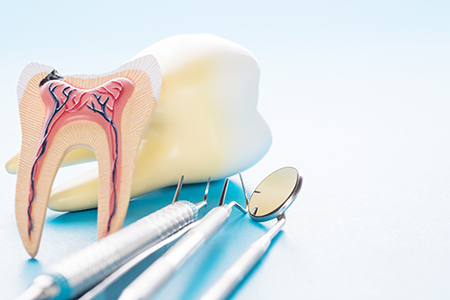
At the center of each tooth lies the dental pulp — a collection of nerves, blood vessels, and connective tissue that helps the tooth develop and respond to stress. When the pulp is exposed to bacteria through deep decay, cracks, or traumatic injury, it can become inflamed or infected. Once the pulp is irreversibly damaged, the tooth often requires root canal therapy to remove the source of pain and prevent the infection from spreading.
Not every ache means a root canal is needed, but certain patterns of symptoms often point toward pulp involvement: lingering sensitivity to hot or cold, sharp pain with chewing, a tooth that darkens after injury, swelling in the gums, or an ache that interferes with sleep. A thorough clinical exam and dental X-rays help confirm whether the pulp is affected and determine the best course of action.
Other common causes that lead a tooth to need endodontic treatment include extensive decay that reaches the pulp chamber, a deep crack that communicates with the oral environment, or repeated dental work that compromises the internal tissue. Early evaluation improves the chance of saving the tooth with predictable results.

Prompt attention to persistent dental symptoms is important because infections can advance quietly before causing dramatic pain. A tooth that seems only mildly troublesome one week can become a source of swelling, spreading infection, or structural breakdown if left untreated. Catching problems early often allows for simpler, less invasive care.
Delaying treatment increases the likelihood that surrounding bone and soft tissues will be affected, which can complicate later restorative options. In some cases, a delay may lead to the need for extraction and a more complex replacement solution. Regular examinations and timely X-rays are a reliable way to spot developing issues before they escalate.
Your dentist will weigh the condition of the tooth, the quality of the remaining tooth structure, and the health of the surrounding tissues when recommending treatment. When root canal therapy is advised, acting in a timely manner helps preserve oral health and often streamlines restorative planning afterward.
Root canal therapy is performed under local anesthesia to ensure comfort. The dentist creates a small opening in the crown of the tooth to access the pulp chamber and canal system, then carefully removes the inflamed or infected tissue. Specialized files and irrigation solutions are used to shape and clean the canals, removing bacteria and debris from the internal space.
The cleaned canals are then filled with a biocompatible material to seal them and prevent recontamination. In many cases a temporary filling is placed while the tooth heals; a permanent crown or onlay is usually recommended afterward to restore strength and function. The number of appointments varies depending on the tooth’s anatomy and the presence of active infection.
For patients who experience dental anxiety, additional comfort measures are available. Your dentist can discuss options such as nitrous oxide or other forms of dental sedation to help you remain relaxed during the procedure. The team will also review aftercare instructions and what to expect in the hours and days following treatment.

After treatment, it is normal to experience some tenderness or mild soreness for a few days as the tissues settle and heal. Over-the-counter anti-inflammatory medications are often sufficient to control discomfort; your dentist will advise on appropriate options and whether any prescription medication is necessary. If antibiotics are prescribed for an active infection, it is important to complete the full course.
A tooth that has undergone root canal therapy should be restored with a permanent crown or suitable restoration in a timely fashion to protect the remaining tooth structure from fracture. Without a definitive restoration, the treated tooth is more vulnerable to damage from chewing forces. Once properly restored, most treated teeth return to normal function and can last for many years with routine care.
Good oral hygiene, regular dental checkups, and avoiding habits that stress teeth (such as chewing hard objects) all support the longevity of endodontically treated teeth. If you notice increasing pain, swelling, or any unusual changes after treatment, seek evaluation promptly so potential problems can be addressed early.
Our team at Richard Hardt's Live Oak Dental is committed to guiding you through diagnosis, treatment, and restoration with clear information and a steady focus on comfort. We combine modern techniques with a conservative approach aimed at preserving your natural teeth whenever possible.
If you have questions about root canal therapy, are experiencing tooth pain, or would like to learn whether a particular tooth can be saved, please contact us for more information.
A root canal is a dental procedure that removes inflamed or infected tissue from inside a tooth to relieve pain and stop infection from spreading. The canals are cleaned, shaped, and sealed with biocompatible materials so the remaining tooth structure can be preserved. Modern techniques make the procedure focused on saving natural teeth whenever possible.
The treatment helps maintain chewing efficiency and bite alignment while protecting the jawbone and adjacent teeth. When the pulp is irreversibly damaged by decay, fracture, or trauma, root canal therapy is often the most conservative option compared with extraction. Your dentist will explain why the procedure is recommended and discuss the restoration that will protect the tooth afterward.
Certain symptoms commonly indicate that the pulp inside a tooth is compromised, including lingering sensitivity to hot or cold, sharp pain when biting, a tooth that darkens after injury, or swelling in the gums. Some infections progress quietly, so a tooth that only feels slightly different may still require evaluation. A clinical exam and dental X-rays are essential to determine whether the pulp is affected and to plan appropriate treatment.
Not every ache requires root canal therapy; other conditions like gum disease or a cracked tooth can cause similar symptoms. Your dentist will review your history, perform diagnostic tests, and explain whether endodontic treatment or an alternate approach is best. Early assessment improves the chance of saving the tooth with predictable results.
Root canal therapy is performed under local anesthesia to ensure comfort while the dentist accesses the pulp chamber through a small opening in the crown of the tooth. Specialized files and irrigation solutions are used to remove diseased tissue, disinfect the canals, and shape the space for a permanent seal. The canals are then filled with a biocompatible material and the access is restored to prevent recontamination.
Some cases require a temporary filling and a follow-up visit to place a definitive restoration such as a crown or onlay to protect the tooth from fracture. The number of appointments depends on the complexity of the tooth and whether active infection is present. Your dentist will review aftercare, signs to watch for, and the recommended timeline for final restoration.
Most patients report that the procedure is no more uncomfortable than receiving a filling because local anesthesia numbs the tooth and surrounding tissues. The pain people associate with root canals is usually the result of the infection itself rather than the treatment, and many patients experience relief soon after therapy. For patients with dental anxiety, additional comfort measures such as nitrous oxide or other sedation options can be discussed with the dental team.
Mild soreness or tenderness for a few days after treatment is common as the tissues heal, and over-the-counter anti-inflammatory medications are often sufficient to manage discomfort. If antibiotics are prescribed for an active infection, it is important to complete the course as directed. Contact your dentist if pain, swelling, or other symptoms worsen after treatment so they can evaluate you promptly.
Recovery time varies by individual and by the tooth treated, but most patients return to normal activity the same day with only minor soreness for several days. Any postoperative discomfort typically subsides within a few days and is manageable with recommended pain relievers and rest. Eating softer foods and avoiding chewing on the treated tooth until it is fully restored can help protect the area during early healing.
A permanent crown or onlay is often recommended to restore strength and function; completing this restoration in a timely way reduces the risk of fracture. Routine dental care and regular checkups help monitor the treated tooth over the long term. If you notice increasing pain, swelling, or unusual changes after treatment, seek evaluation so potential problems can be addressed early.
After root canal treatment a tooth can become more brittle because a portion of its internal structure has been removed and moisture content may change over time. A crown or onlay restores the tooth's shape, protects it from fracture, and helps distribute chewing forces more evenly. Final restoration also prevents bacteria from re-entering the root canal system through cracks or marginal breakdown.
The type of restoration depends on the tooth's location, remaining tooth structure, and functional demands. Posterior teeth that sustain heavy chewing forces often benefit from full crowns, while some front teeth can be restored with less extensive coverage. Your dentist will recommend the restoration that best preserves function and appearance for the long term.
The primary alternative to root canal therapy is extraction of the affected tooth, which may then be followed by replacement options such as an implant, bridge, or removable prosthesis. While extraction removes the source of infection, preserving the natural tooth often maintains better chewing efficiency, jawbone support, and adjacent tooth stability. Your dentist will discuss the benefits and drawbacks of extraction versus endodontic treatment based on your specific situation.
In some cases, less invasive measures or monitoring may be appropriate if symptoms are minor and the pulp has not been irreversibly damaged. However, delaying definitive treatment when the pulp is infected can lead to worsening infection, swelling, or the need for more complex care. A timely, individualized evaluation helps determine the most conservative and predictable path forward.
While root canal therapy is highly successful, treated teeth can occasionally develop recurrent infection due to complex canal anatomy, new decay, or breakdown of the restorative seal. If symptoms return or new problems are identified on X-rays, retreatment of the root canal or endodontic surgery may be recommended to address persistent infection. Your dentist will assess the cause and discuss whether nonsurgical retreatment, apical surgery, or extraction is the best option.
Timely follow-up and good oral hygiene reduce the risk of complications after treatment. Regular dental exams and radiographs help detect issues early so they can be managed conservatively when possible. When retreatment is recommended, modern endodontic techniques often allow preservation of the original tooth.
Preparation is straightforward: follow any preoperative instructions from your dentist, arrange for transportation if you will use sedation, and bring a list of current medications and medical conditions. Eating a light meal beforehand is acceptable unless you have been given different instructions related to sedation. If you experience significant swelling, fever, or rapidly worsening symptoms before the appointment, call the office so the team can advise you on next steps.
If you have dental anxiety, discuss comfort options with your dentist in advance so appropriate measures can be arranged on the day of treatment. Good communication about medical history, allergies, and any prior reactions to anesthesia helps the team tailor care safely. Arriving a few minutes early allows for a calm check-in and any necessary preparations before the procedure begins.
Our approach emphasizes careful diagnosis, clear explanation of options, and the use of modern endodontic techniques to maximize the chance of saving a natural tooth. We combine digital imaging and contemporary instruments with a conservative treatment philosophy so patients can make informed decisions about their care. Comfort and communication are central, and the team reviews restoration planning to protect the tooth after therapy.
When root canal therapy is recommended, the team at Richard Hardt's Live Oak Dental works to ensure predictable results and a comfortable experience in our Porterville office. We will discuss sedation options, aftercare instructions, and the timing of final restoration so you know what to expect at each step. If you have symptoms, questions, or would like an evaluation to determine whether a tooth can be saved, contact our office to schedule an exam.